


Images Courtesy of Voltaic Marine
Evolving threats and new technologies are challenging the way naval forces think about defense. In the decades following World War II, there has been relatively limited demand for defensive naval capabilities. Fewer of the world’s battles were fought at sea, so militaries could rely on their existing inventories when naval action needed to be taken. [SN1.1]However, with recent global conflicts and maritime attacks, the need for cost-effective naval solutions is becoming critical to modern defense.
Many of the unmanned surface vehicles (USV) and unmanned aerial system (UAS) threats today are cheap to make and easy to produce in large quantities, causing defenders to reconsider how best to fight them. Does it make sense to counter a $10,000 threat with an interceptor that costs 50 times that amount? In the long term, this can lead to immense cost asymmetry and give adversaries the upper hand. Modern warfighters require flexible, low-cost solutions to effectively counter threats.
“The autonomous threats emerging today pose a critical challenge for naval defenders,” said Tim Abbott, Moog Naval Systems Business Development Manager. “Mission success depends on our ability to adapt and innovate; and produce cost-effective solutions that do the same.”

When deciding how to address drone threats, another important factor to consider is the human cost. If the threats are unmanned, why should people be put in unnecessarily dangerous situations? It’s vital to match adversaries where they’re at by neutralizing USV and UAS threats with more capable unmanned vehicles and systems.
Investing in USV defenses keeps sailors out of harm’s way and prevents adversaries from gaining a competitive advantage.
Why Speed Is So Important
The ever-evolving nature of the technology powering modern drones demands agile, rapid response.
In order to ensure the best defense against these unmanned threats, there is a strong need to move quickly when developing solutions, so they aren’t outdated by the time they’re put to use. When adversaries utilize AI-enhanced UAS and USV technology, the response from defenders needs to be innovative, flexible, and ready to go wherever threats happen.
While there are significant efforts into making defensive USVs right now, practically none of them include a modular weapon system on the ship. Though these USVs are still useful in fighting modern drone threats, a boat with no weapons isn’t as effective as it could be with a platform that can adapt to different situations. Including such a system on a USV allows for much faster weapon reconfiguration, saving critical time during the most important situations.
Images Courtesy of Voltaic Marine
Bringing a Proven Solution to a New Domain
First introduced in 2016, Moog’s Reconfigurable Integrated-weapons Platform (RIwP) has been a dominant force in the fight against aerial threats, with its counter-UAS and short-range air defense (SHORAD) capabilities. Since then, RIwP has been fielded on the U.S. Army’s Mobile-Low, Slow, Small Unmanned Aircraft Integrated Defeat System (M-LIDS) and SGT Stout (M-SHORAD Inc 1). Later, in 2025, Moog introduced a variant of RIwP designed to meet the U.S. Army’s M-SHORAD Increment 4 requirements called Lightweight RIwP (LW RIwP).
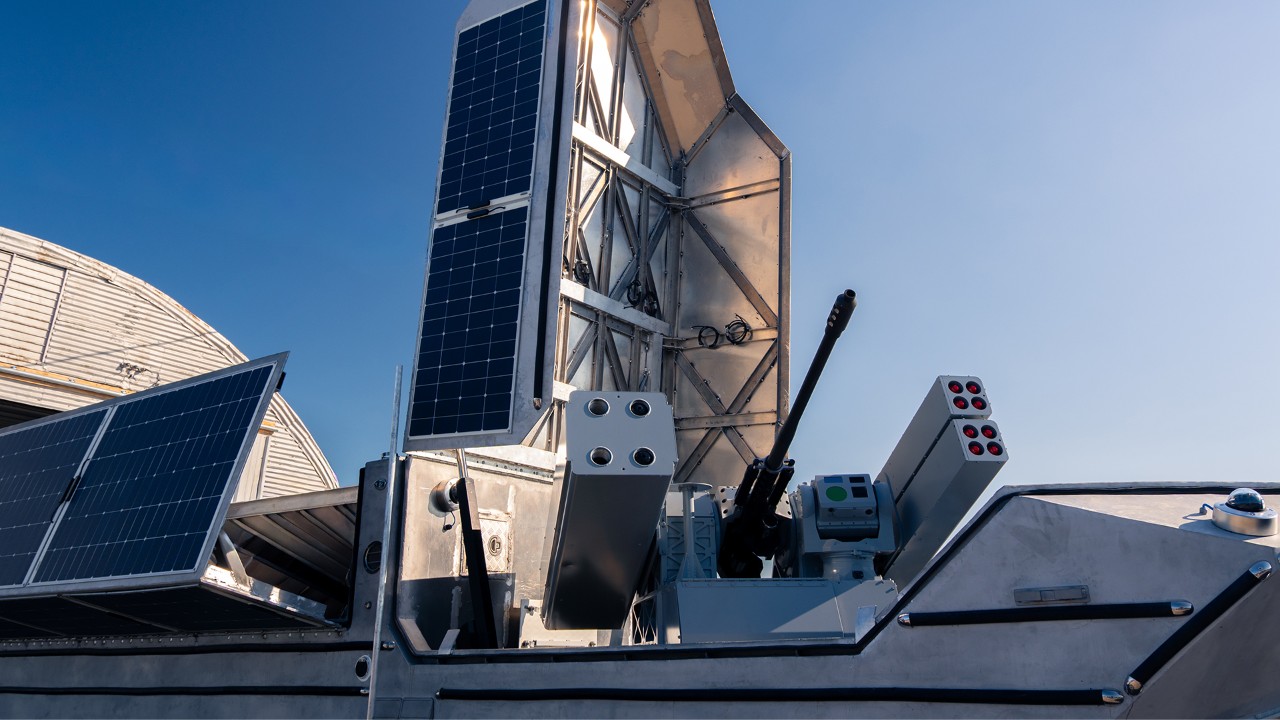
LW RIwP is weapon, sight, and platform agnostic. It maintains full commonality with the Standard RIwP turret, while being roughly one-third of the weight. It offers the maximum firepower capacity in its class, including the integration of a 30mm cannon and multiple missile effectors. With increased onboard ammunition capacity, LW RIwP allows for extended engagement duration designed for modern threats.
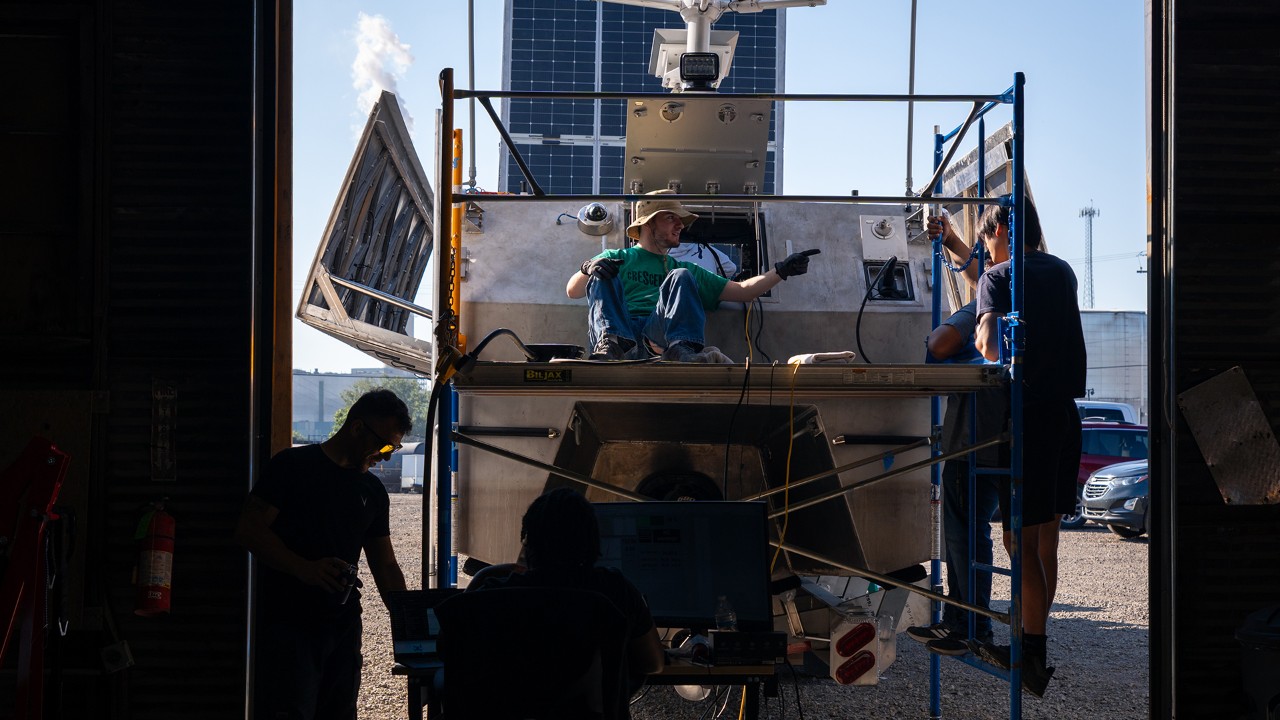
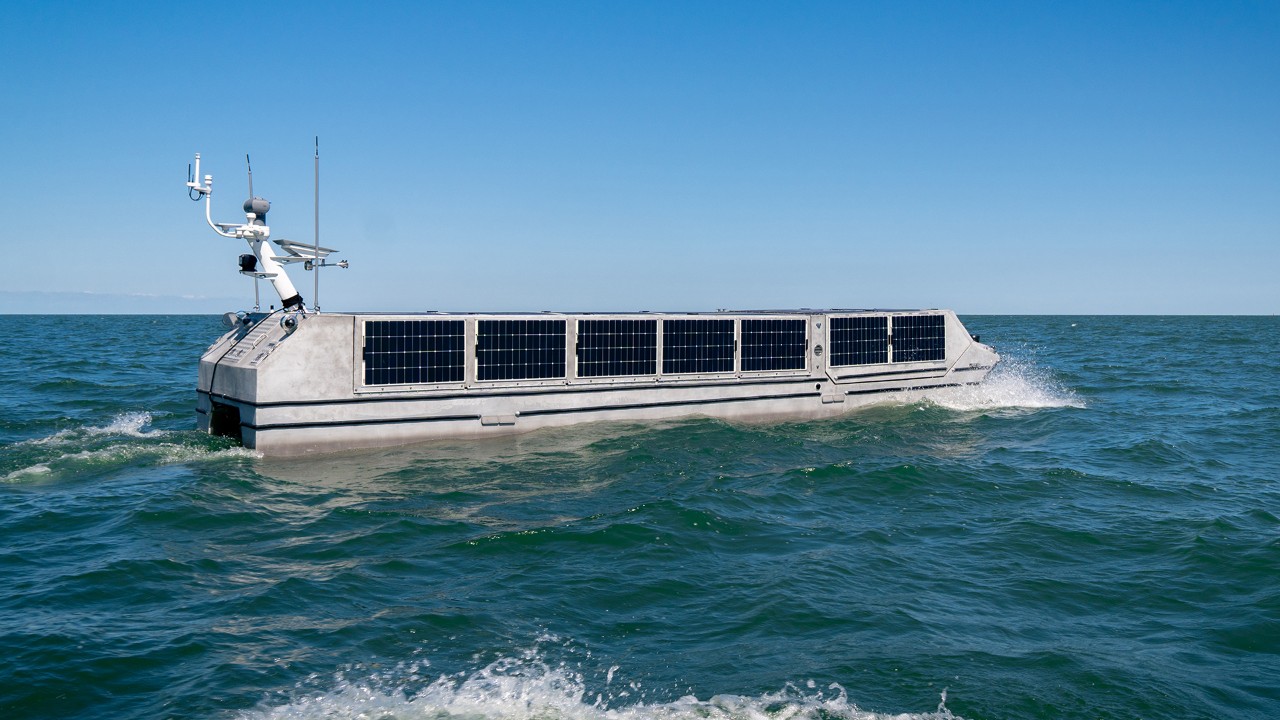
LW RIwP is being integrated with Voltaic’s AEU39 USV to create a first-of-its-kind naval solution. Complementing LW RIwP’s mission endurance capabilities, AUE39’s electric-hybrid design with solar panel integration enables the vessel to stay on station for long periods of time. This opens the door for multiple key applications, like fleet protection and littoral defense.
“The AEU39 was built for modular payload bays, abundant electric power, and proven payload integration. Unmanned threats are cheap, varied, and multiplying; the response has to be too. RIwP puts multiple defeat options on a single reconfigurable mount, so operators match the cost of the intercept to the cost of the threat,” said Richard Phamdo, CEO Voltaic Marine.
By introducing RIwP to the naval domain, maritime forces can intercept missiles, take out drones, and dive into the future of autonomous ships – all with one wireless platform.
“Our collaboration with Voltaic takes everything that made RIwP successful on land and brings those benefits to the sea,” said Doug White, Moog Weapons Systems Business Development Manager. “As unmanned threats evolve into new domains, we continue to innovate to ensure adversaries don’t take the upper hand."
Expanding RIwP’s presence beyond its original land applications emphasizes Moog’s commitment to showing up wherever the warfighter needs support. Our combat-proven systems, flexible designs, and scalable production capabilities keep defenders ready for today’s threats and for what’s next, no matter the mission.
