Magnetic Dampers


Overview
The ruggedness of these dampers makes them well-suited for airborne, hypersonic, on-orbit, and even lunar environments. Previous applications of Moog’s magnetic dampers include isolation mounts for multiple Hubble Space Telescope payloads aboard the Space Shuttle, isolation of reaction wheel assemblies, and rotary damping for an angle of attack sensor on a F-35.
A magnetic damper takes advantage of passive magnetic eddy currents to generate damping. The damper includes permanent magnets to generate a magnetic field. A conductive material moving within this stationary magnetic field generates circular electric currents, known as eddy currents, in the conductor. The eddy currents create their own magnetic field that interacts with the permanent magnetic field to create a drag force. The drag force is proportional to the velocity of the conductor, thus replicating a viscous damper. Back iron material directs and contains the magnetic field to avoid interfering with nearby sensors or other sensitive components.
Key Advantages
- No external power or wires required - completely passive
- Low sensitivity to temperature
- Wide operating temperature range
- No fluids with potential for leaks/contamination
- All metallic components with low outgassing
- High reliability from non-contacting design
- Highly linear and predictable
- Adjustable damping rate
- Bi-directional operation
- Simple and robust
- On-orbit compatibility
Applications for Magnetic Dampers
Rotary
- Solar array deployments
- Antenna deployments
- Boom deployments
- Door/cover deployments
- Lunar rover suspension system damper
- Aircraft angle of attack sensor damper
Linear
- Isolation mounts for sensitive payloads during launch
- On-orbit isolation mounts for noisy components such as reaction wheels
Specifications
| Features | 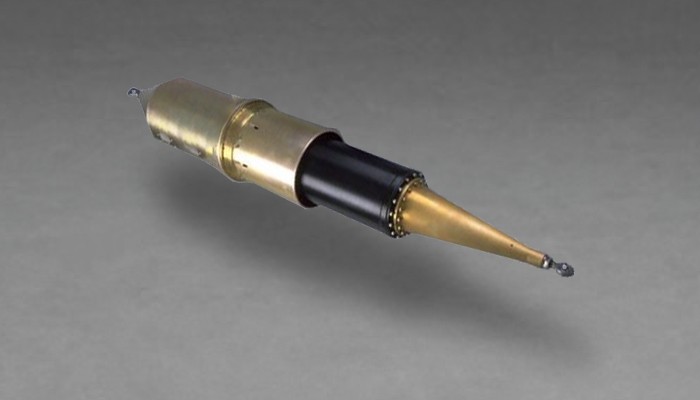 | 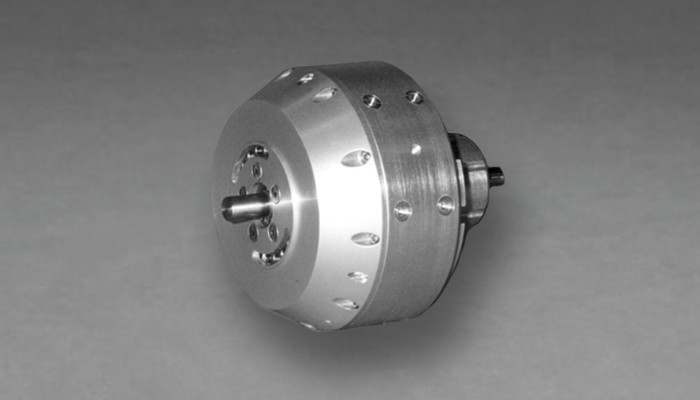 |
Type | Linear | Rotary |
| Stroke | 10 Inches (pk-pk) | Unlimited |
| Damping Rate | Adjustable 8 to 20 lbf-sec/inch or higher | Adjustable 0.2 to 720 in-lbf-sec/rad or higher |
| Temperature Range | -40 to +65 deg C | -40 to +85 deg C |
| Input Power | None | None |
| Fluids Used | No | No |
| Space Environment Compatible | Yes | Yes |
Custom sizes, damping rates, or other features can be accommodated upon request